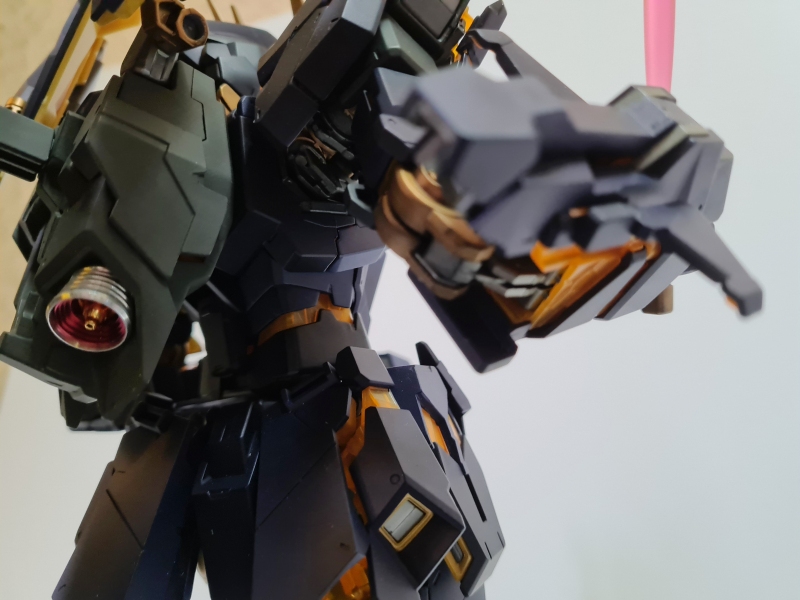
PG Banshee Norn

PG_Banshee_norn-01

Image 1 of 19

Picture of my finished PG Banshee Norn No.01

If you’re thinking about tackling the PG Banshee Norn Gunpla, here’s a candid look at the build, especially the hiccups and how to overcome them.

Right off the bat, the orange psycho frame makes it clear you’re working on the Banshee Norn. Swapping out the stock verniers for JAO Parts was a breeze since they’re push-fit replacements and no drilling needed. Detailing the joints was mostly for practice, as much of it gets hidden, but masking off fixing points is crucial; paint here can make pins too tight when assembling the shoulders.

Painting adds personality, but it also brings problems. Painted pegs often needed scraping or, in some cases, drilling out holes to fit properly. The cockpit and shoulder joints fit securely, but shadows can hide your paintwork. When fitting psycho frame parts, patience is key, and test fit and adjust before final assembly to avoid damaging painted edges. Switching the gold effect to a satin finish required stripping the plated coating and respraying with Vallejo Gold on a matte black base.

Most inner frame details on the feet and legs won’t be visible but painting them is great practice. Be sure to cover poly caps to prevent future issues. The lower leg armour is complex, with thirteen pieces per unit, and mixing blue/grey shades helps break up the colour. Articulation in the knee joint is impressive, but trial fitting is essential as too much force can break pins. About 70% of the inner workings are hidden but painting everything is part of the fun. If you plan to keep the kit in transformed mode, set those parts early.

Shoulder assembly required scraping paint for smooth movement. Some parts felt brittle, so sanding shafts helped with fit. The shield is massive over 45cm long and painted parts sometimes needed scraping for a good fit. The real disaster struck with the backpack wings: a segment snapped during assembly. The fix involved sanding, masking, gluing, priming, and repainting. Matching the repair on the opposite side made it look intentional, and careful sanding and painting made the crack nearly invisible.

Creating a scenic base with model railway materials added realism and stability, especially since the Banshee is rear-heavy. Patience is vital, waiting for glue to dry and layering materials takes hours. Screwing the legs into the base and using superglue ensures the model stays put.

Key Takeaways

  • Test fit everything, especially painted parts.
  • Mask and sand where needed for smooth movement.
  • Don’t panic if something breaks—careful repair can make it look intentional.
  • Patience pays off, both in assembly and scenery work.

This build is a journey of problem-solving, creativity, and learning. If you hit a snag, remember there’s almost always a fix!

Here are the links to the blog posts in making the PG Banshee Norn